CrossFit Got One Big Thing Right: Fitness Should Prepare You for Life, Not Just Mirrors
Learn more about this article.
10 min read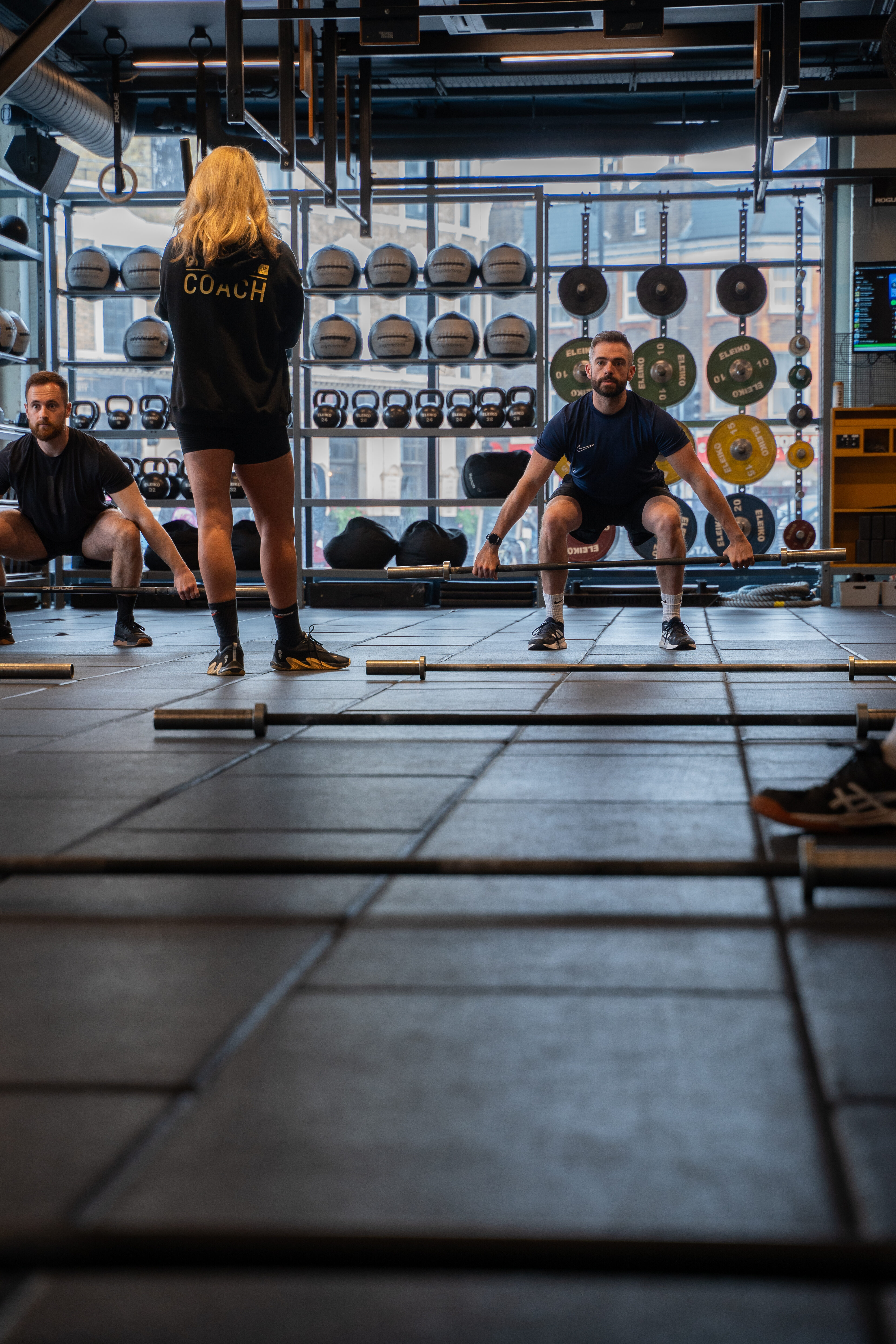
CrossFit gets criticised a lot.
Some of it fair. Some of it wildly overblown by people whose idea of fitness is rearranging cable attachments for 90 minutes.
But whether you love it, hate it, or still think kipping pull-ups are a form of public performance art, CrossFit changed the fitness industry permanently.
Because it brought something important back into mainstream training:
Capability.
Not just aesthetics.
“I'm really enjoying the variety of my workouts at Gymnasium with sessions focussing on strength, cardio, or mobility.”
— Thomas, Gymnasium Brixton
The shift from isolation to integration
For years, commercial fitness drifted towards increasingly isolated training: chest day, arm day, treadmill, repeat forever.
It worked for people who wanted to look a certain way. But it left a lot of people asking: "Why can't I carry a suitcase up stairs without breathing hard?"
CrossFit reintroduced ideas many gyms had quietly abandoned: movement patterns, athleticism, strength, conditioning, skill acquisition, power, community, and measurable progression.
And eventually, the entire industry started copying it.
HYROX. Functional fitness classes. Strength and conditioning programming. Hybrid training. Group lifting concepts. Performance-based boutique gyms.
A lot of modern fitness traces back to one central idea:
People want to feel capable again.
The conversation is evolving: intensity versus sustainability
The early era of CrossFit often celebrated maximum intensity, maximum volume, suffering as a badge of honour, and training hard all the time.
And to be fair, for some people, that created incredible transformations.
But the smarter conversation emerging now is different:
How do you train hard without breaking yourself?
That is where longevity enters the picture.
Not anti-performance. Not anti-intensity. Just more sustainable.
Because long-term health is not built by constantly flirting with injury, exhaustion and cortisol-fuelled chaos.
It is built through consistency.
And consistency usually survives longer than extremes.
Longevity training is not about becoming soft
There is a misconception that "training for longevity" means resistance bands forever, biohacking podcasts, cold plunges replacing effort, and avoiding hard training entirely.
In reality, the research around healthy ageing points repeatedly towards something far less glamorous:
Muscle matters.
Strength is strongly associated with healthier ageing, better metabolic health, lower fall risk, improved insulin sensitivity, higher quality of life, and better long-term function.
Bone density matters too. Cardiovascular fitness matters. Balance matters. Power matters. Mobility matters.
In other words: the things functional fitness trains are often the exact things people lose as they age.
That is part of why strength training participation has exploded globally in recent years. The 2026 Global Fitness Report describes strength training as having moved from a niche activity into "the new default for a complete workout."
The report also highlights a major shift away from purely aesthetic training goals towards broader health, resilience and wellbeing.
"Fitness should prepare you for life, not just mirrors. The best training builds the capacity to do things well for a very long time."
“I started training here as I was struggling with ankle and knee injuries from running, and the functional training has made me stronger than ever, and hitting 5k/10k PBs.”
— Ali, Gymnasium Brixton
What CrossFit actually understood
At its best, CrossFit understood something many traditional gyms forgot:
Humans are supposed to do varied things.
Lift. Carry. Run. Jump. Climb. Move under fatigue. Coordinate. Adapt.
Not just isolate muscles while staring at fluorescent lighting and daytime television.
CrossFit also understood another important thing:
Community changes adherence.
People are dramatically more likely to train consistently when people know their name, coaches care about their progress, progress is visible, effort is shared, and workouts feel purposeful.
The fitness industry now openly acknowledges this. Modern fitness consumers increasingly prioritise social connection, challenge, coaching and atmosphere alongside physical results.
That is one reason group functional fitness continues to grow.
People do not just want access to equipment anymore.
They want guidance, structure, accountability, energy, and belonging.
The real problem was never functional fitness
The problem was usually dosage.
Too much volume. Too little recovery. Poor coaching. Ego-driven scaling. Trying to train like professional athletes while sleeping five hours and sitting at a laptop all day.
The issue was not deadlifts.
The issue was doing 100 of them badly while competing against Dave from accounts on a Wednesday night.
Functional fitness itself is not inherently reckless. Done properly, it can be one of the most complete approaches to long-term physical health available, combining strength, aerobic fitness, mobility, coordination, power, balance, resilience, and social connection.
That combination is incredibly valuable as people age.
“Classes are fun but challenging. The team made me love coming to the gym again.”
— Jude, Gymnasium Brixton
The future is less tribal
The future of fitness likely looks less like isolated camps. Less "just bodybuilding," "just running," or "just CrossFit." More strength, aerobic conditioning, mobility, recovery, skill development, community, progression, and sustainability.
In other words: hybrid capability.
People increasingly want training that helps them look good, feel good, move well, stay healthy, maintain energy, avoid injury, and remain physically capable for life.
Not just survive workouts for Instagram clips.
And honestly, that is probably a healthier direction for the industry.
Because the goal was never really to become exceptional at exercising.
The goal was to build a body and mind capable of living well for a very long time.
That is what CrossFit got right.