HYROX Training: Why Everyone Suddenly Seems To Be Pushing Sleds
Learn more about this article.
12 min read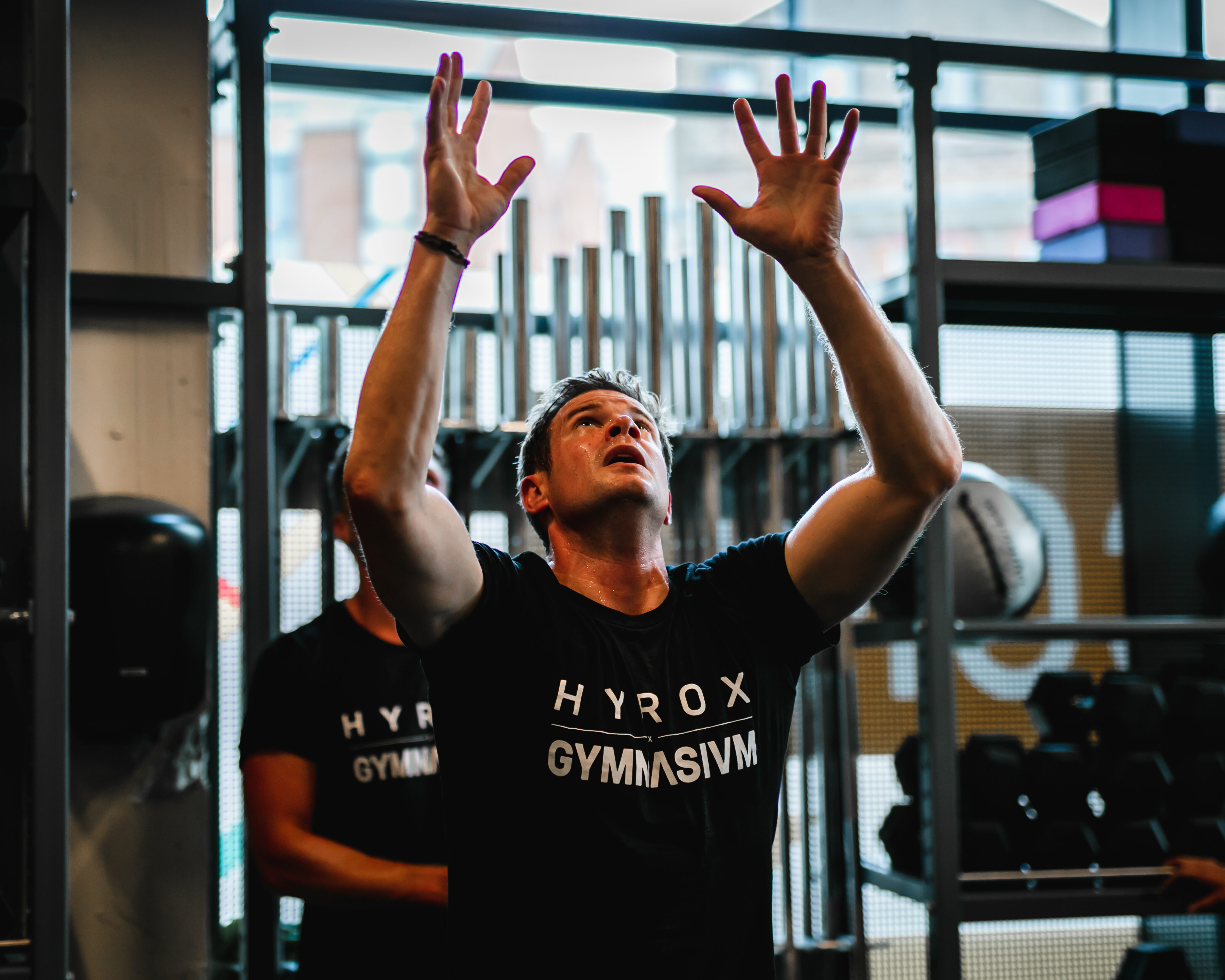
Search interest for HYROX training has exploded over the last few years.
And honestly, it makes sense.
For a long time, the fitness industry split itself into distinct tribes: runners, lifters, CrossFitters, spin class devotees, bodybuilders, and "I'll just use the treadmill upstairs" people.
HYROX smashed through a lot of that tribal thinking.
It took endurance. It took strength. It took functional fitness. It made it measurable. Then wrapped it inside a big-event atmosphere that feels more like a sporting occasion than a gym class.
Suddenly people had something to train for again.
Not just "getting fitter." Not just "summer." Not just vaguely trying to "tone up."
A real event. A real challenge. A finish line.
And that changes behaviour.
"Fantastic hybrid gym! Offers a variety of classes from CrossFit, Hyrox and Strength and Endurance! Class times are versatile through ensuring lots of choice regardless of your daily commitments."
— Toby, Google review
What is HYROX?
HYROX is an indoor fitness race.
The format is always the same: 1km run, followed by 1 functional workout station, repeated 8 times. The movements include SkiErg, sled push, sled pull, burpee broad jumps, rowing, farmer carries, sandbag lunges and wall balls.
The standardised format is a huge part of why it has grown so quickly.
You can compare your time against your friends, your age group, other cities, professional athletes or your own previous race.
It sits somewhere between endurance racing, strength endurance, functional fitness, and mass participation sport.
And unlike a marathon, it feels more accessible to many people because you do not need to be a "runner" to participate.
Why HYROX training actually works
HYROX accidentally solved one of the fitness industry's biggest problems:
People struggle to stay motivated without a clear goal.
The 2026 Global Fitness Report found that people increasingly want challenge, energy, variety, measurable progression and social connection. That is basically HYROX in a nutshell. The report also showed 54% of people want new ways to get fit, 64% are more likely to work out somewhere with a good vibe, and younger generations increasingly want workouts that push them physically.
Again: that is the entire HYROX ecosystem.
It gives training structure. It gives people identity. It creates routine. It creates community. It gives people a reason to keep showing up on cold Tuesday evenings when the sofa is making a strong case for itself.
"HYROX gives people something real to train for. That changes everything about consistency and effort."
The big misunderstanding about HYROX
A lot of people think HYROX is just: "run loads and suffer."
That is usually how people end up folded over a SkiErg questioning every life decision they have ever made.
Good HYROX training is actually about balance.
You need aerobic fitness, strength endurance, pacing strategy, movement efficiency, structural durability and recovery capacity.
Too much running and you lose strength. Too much lifting and the running becomes miserable. Too much intensity and you fry yourself.
The best HYROX athletes are not just fit. They are incredibly efficient.
They move well under fatigue. They pace themselves intelligently. They know where to push and where to conserve.
HYROX training for beginners
The good news: you do not need to already be an elite athlete to start HYROX training.
In fact, most people should not start by training "like a HYROX athlete."
They should start by building consistency, improving general fitness, learning movement patterns, getting stronger and improving running gradually. This is where many people go wrong. They jump straight into maximal sled pushes, endless compromised running, six hard sessions a week and "engine" sessions every day.
Then wonder why their Achilles tendon starts sending legal threats.
The foundations matter.
At Gymnasium, we usually see the best long-term progress when people build 2–3 structured strength sessions per week, 2 running sessions per week, 1 longer aerobic effort, mobility and recovery habits, and prioritise consistency over intensity.
Boring answer. Correct answer.
Want the full 12-week build, station by station? Read how to train for HYROX.
HYROX is really about hybrid training
HYROX sits inside the bigger rise of hybrid training.
That means combining strength, conditioning, endurance, mobility and recovery.
Instead of specialising too early.
This is one reason HYROX has exploded in London fitness culture.
People increasingly want to feel athletic, move capably, have energy and stay resilient.
Not just be good at one machine in one corner of the gym.
The fitness industry spent years splitting training into silos.
HYROX pulled things back together again.
Why group training matters for HYROX
One thing the internet misses:
HYROX is hard to train for alone.
You can do it. But it is much easier with structure, coaching and people around you.
The Global Fitness Report showed 60% of aspiring athletes enjoy working out in a group, many people lack confidence in solo training, and energy and atmosphere heavily influence attendance.
That matters.
Because HYROX training can become incredibly grindy if every session feels like: "3 x 1km run alone while staring into the abyss."
Group training changes the emotional experience: pacing becomes easier, effort increases naturally, accountability improves and people actually enjoy it more.
There is a reason run clubs and fitness racing communities are exploding.
Humans are social creatures pretending to be productivity machines.
The mistake many HYROX gyms will make
The danger now is that every gym becomes sleds, wall balls, SkiErgs, repeat forever. The novelty disappears quickly if programming lacks depth. The best HYROX training should still develop strength, movement quality, mobility, aerobic base, recovery capacity and longevity.
Not just tolerance for suffering.
Because eventually injured people stop racing, exhausted people stop training and bored people stop showing up.
Long-term fitness beats short-term destruction. Every time.
HYROX training at Gymnasium
At Gymnasium, we see HYROX as part of a bigger picture.
Not just: "how smashed can we make people?"
But building real fitness, improving strength and endurance together, helping people train consistently, creating structure without intimidation and developing long-term athleticism. That means coached sessions, scalable workouts, progression pathways, proper strength work, running support, recovery focus, mobility development and community.
Some members race competitively. Others simply want to feel fitter, leaner and more capable.
Both are valid.
Because the real win is not just race day.
It is becoming the kind of person who trains consistently, feels better physically and mentally, and actually enjoys the process along the way.
That is the part that changes lives.
And yes, occasionally includes pushing a sled while making noises usually heard in wildlife documentaries.