Why More Runners Are Starting To Lift Weights
Learn more about this article.
7 min read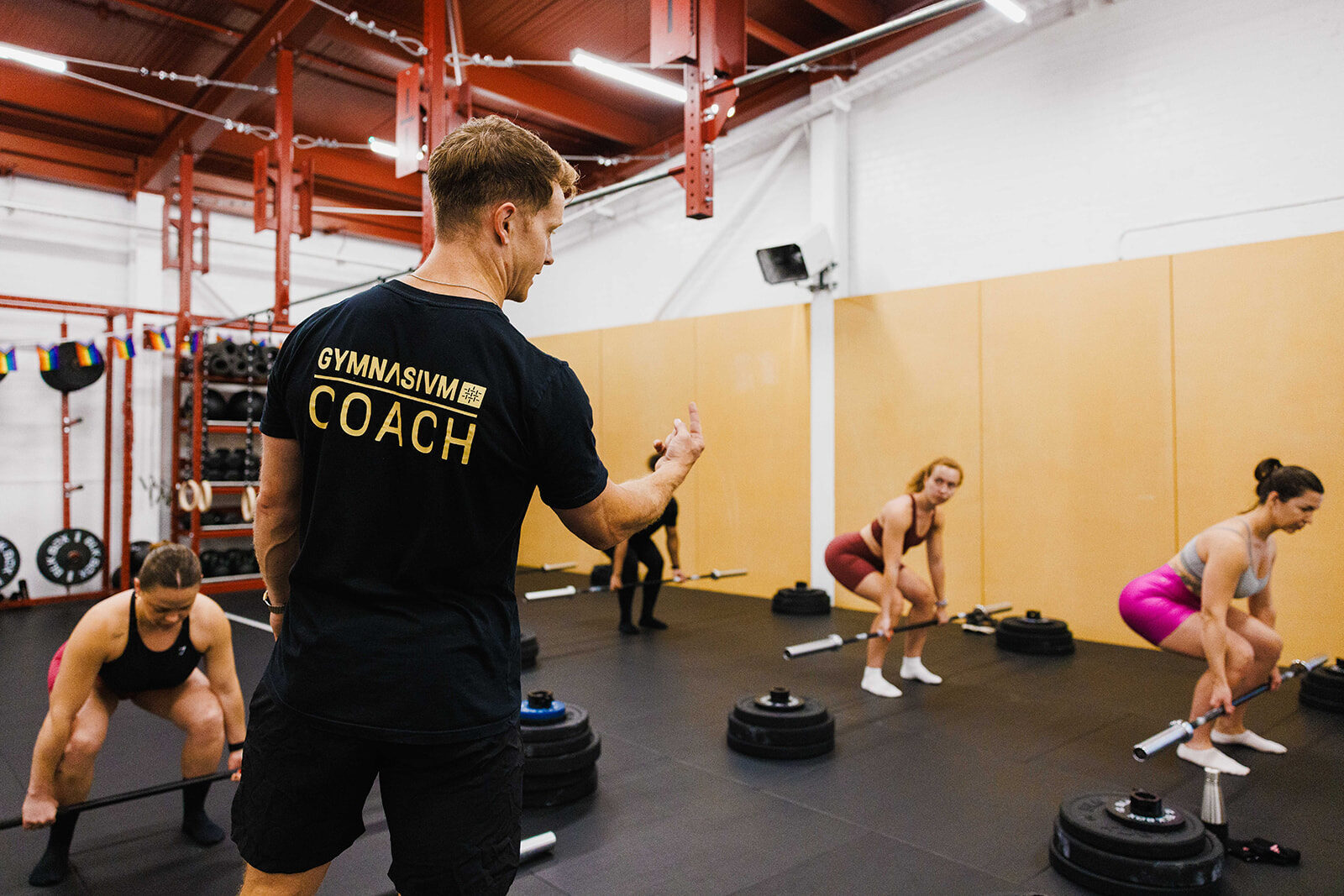
And why more lifters are finally learning to run.
For years, fitness culture split people into tribes.
You were either a "runner" or "someone who lifted." One group thought lifting weights would make them bulky and slow. The other thought cardio was a direct attack on muscle mass. Turns out both sides were missing something important.
Because most people do not actually want to become elite marathon runners, specialist powerlifters or full-time bodybuilders. They want to feel athletic, move well, stay lean, have energy, avoid injury, look capable (not just look fit) and still be able to run, lift, hike, carry things and play sport in their 40s, 50s and beyond.
That is where hybrid training comes in.
And right now, it is one of the biggest shifts happening in fitness.
“I joined this gym as someone who only trained in the gym by myself and did some road and track running. Was initially nervous but met the coaches who were really helpful and made me feel at ease.”
— Mark, Gymnasium Brixton
The rise of hybrid fitness
The rise of HYROX, run clubs, strength classes and functional training has accelerated this massively. The industry is moving away from isolated fitness identities and towards broader physical capability.
The modern exerciser increasingly wants variety, challenge, strength, endurance and wellbeing combined into one approach.
Why runners are finally lifting weights
Running exposes weakness surprisingly quickly.
Weak glutes. Poor trunk stability. Limited ankle mobility. Weak hamstrings. Poor hip control.
At first, it feels manageable.
Then eventually it shows up somewhere:
sore knees, irritated Achilles, tight hips, shin splints, lower back pain, plateaued pace and recurring injuries.Strength training helps solve a lot of this.
Not because runners suddenly need to become powerlifters. But because stronger tissues tolerate load better.
Research increasingly shows strength training improves running economy, force production, posture under fatigue, stride efficiency and resilience to injury.
In simple terms: you become harder to break.
And contrary to old-school myths, strength training does not automatically make runners slower.
In many cases, it makes them faster.
Especially recreational runners.
Because most amateur runners are not limited by their cardiovascular system. They are limited by mechanics, durability and tissue strength.
That is why you now see marathon runners deadlifting, HYROX athletes squatting, run clubs doing strength sessions and endurance athletes prioritising mobility and posterior-chain work.
The old "just run more" approach is fading.
“Wanted to find something to help push me in different ways, cardiovascular & strength wise, during my time off from a running injury.”
— Sean, Gymnasium Twickenham
Why lifters are starting to run
At the same time, many people who spent years chasing PBs in squat racks are realising something slightly uncomfortable:
being strong but getting out of breath climbing stairs is not exactly peak fitness.
The pendulum is swinging away from:
"looking fit"
towards:
"actually being fit."
That shift is happening across the entire industry.
The 2026 Global Fitness Report found consumers increasingly prioritise overall health, energy, longevity and mental wellbeing over purely aesthetic goals.
Running develops things lifting alone often misses: aerobic capacity, cardiovascular health, recovery ability, work capacity, endurance and mental resilience.
It is also accessible.
No machines. No complicated setup. No waiting for equipment. No mirror selfies required.
Just shoes, movement and occasional existential discomfort.
Running also gives people something lifting often does not: freedom.
You can do it anywhere. You can do it socially. You can measure progress clearly. And increasingly, people are using events to create structure and motivation.
That is a huge reason why fitness racing and hybrid events are exploding globally.
“The lead coaches are great and made me feel very welcomed right from the start. They are always helping me to improve, whether it's towards my first bar muscle up, or to help improve my running speed.”
— Emily, Gymnasium Brixton
The real sweet spot: broad capability
The goal is not maximum everything.
It is balance.
The healthiest, most sustainable training approach for most people usually sits somewhere in the middle: 2–4 strength sessions per week, 2–3 conditioning or running sessions, mobility work, recovery, sensible progression and enough variation to stay engaged.
That's exactly what structured membership gives you — balanced programming without overthinking it.
Not punishment.
Not random exhaustion.
Not trying to train like a professional athlete while sleeping six hours and answering Slack messages at traffic lights.
Just broad physical capability.
"The healthiest training approach for most people isn't maximum strength or maximum endurance. It's broad capability."
Because the truth is:
your body probably does not care what "tribe" you belong to.
It benefits from strength, endurance, mobility, coordination, recovery and consistency.
And increasingly, that is where modern fitness is heading.
Not specialisation for its own sake.
But building people who are:
strong enough, fit enough, mobile enough and resilient enough to handle real life well.
Which, honestly, sounds far more useful than arguing online about whether Zone 2 is killing your gains.