Run Clubs in London: Why They've Become the New Social Glue
Learn more about this article.
11 min read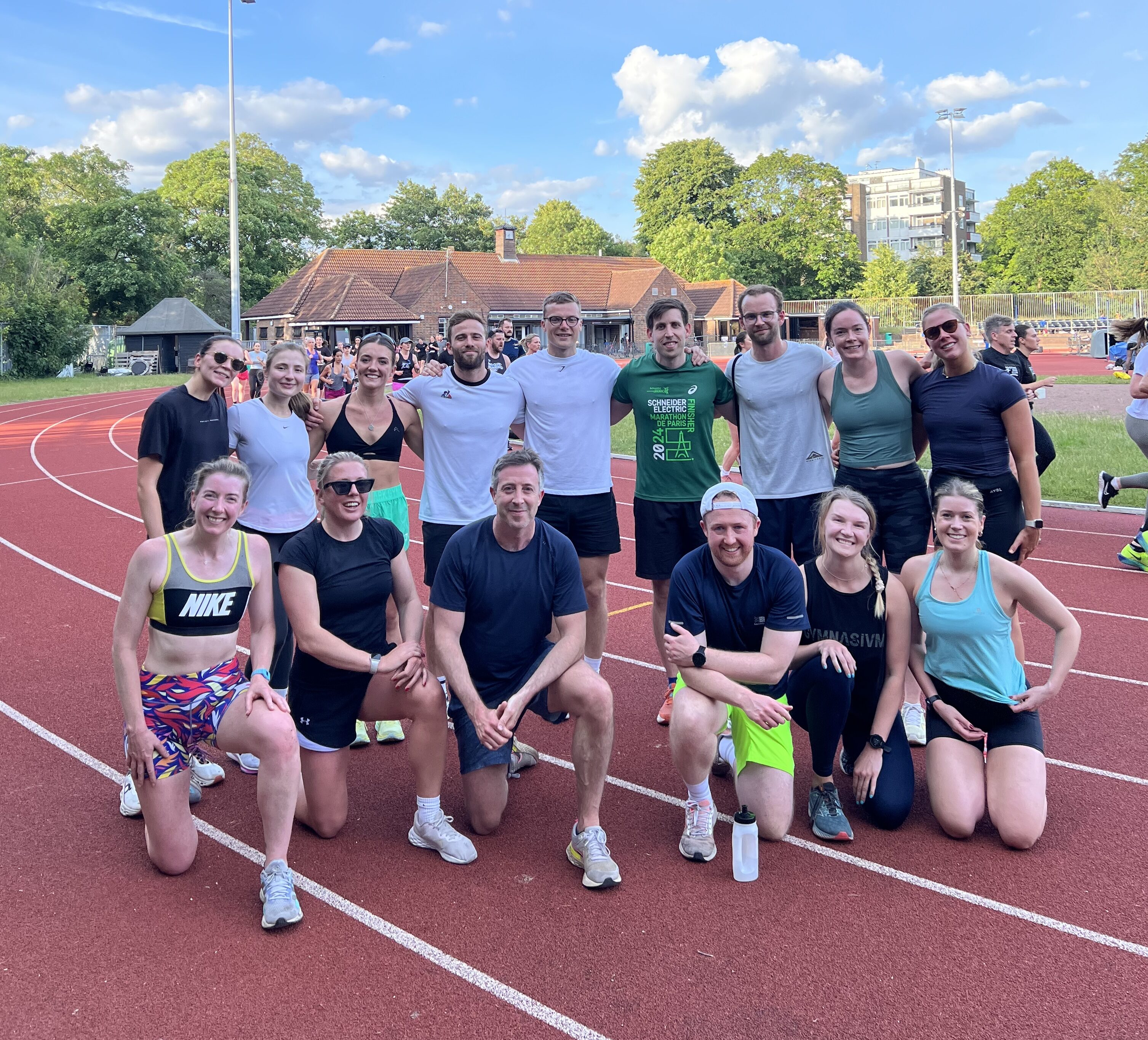
There was a point where "cardio" mostly meant staring at a wall-mounted TV while jogging on a treadmill next to someone aggressively wiping down an elliptical.
That era is dying.
Run clubs have quietly become one of the most important movements in modern fitness. Not just because people want to get fitter, but because people want connection, routine, identity and a reason to leave the house.
And increasingly, they want those things without the pressure, awkwardness or performative nonsense that can sometimes come with traditional gyms.
“The mix of classes, the coaches, the running sessions and regular events are great.”
— Martin, Gymnasium Brixton
Why People Actually Join (And Stay)
At Gymnasium, we've seen this first-hand.
People often join because they want to improve fitness, lose weight or train for an event. They stay because they find something different: people they recognise, structure in their week, conversations outside work, accountability, shared suffering, coffee afterwards, and eventually, belonging.
That's the real role of a run club.
Not just running. Social infrastructure.
Why Run Clubs Are Exploding
The growth isn't random. The wider fitness industry is shifting heavily towards community, challenge, experiences, identity-driven fitness and social wellness. The 2026 Global Fitness Report highlighted that younger generations increasingly want group-based fitness experiences, variety, challenge and social connection.
The data was clear: 64% of people are more likely to work out somewhere with a good vibe, 54% want new ways to get fit, and group connection is becoming increasingly important. People now see fitness as part of their social life, not separate from it.
Run clubs sit perfectly in that space.
Low barrier. Highly social. Easy to start. Easy to share. Easy to belong to.
No mirrors. No waiting for equipment. No complicated onboarding.
Just: "We're meeting here at 7."
“I've been a Gymnasium member for over 4 years and a Brixton member for the last 4 months. I've been to tens of CrossFit gyms both in London and abroad but none quite compare.”
— Jamie, Gymnasium Brixton
The Two Different Types of Run Clubs
Not all run clubs are the same.
And honestly, that's a good thing.
Because people are usually looking for one of two things.
1. The Social Run Club
This is jogging and chatting, coffee afterwards, maybe a beer, meeting people, decompressing after work, fresh air, low pressure, consistency without intensity. The run itself is almost secondary.
The real value is routine, connection, conversation, emotional regulation, and belonging.
For a lot of people, especially in cities like London, this matters massively.
Modern life is weirdly disconnected. People work remotely. Friendship groups spread out. Everything becomes transactional.
Run clubs have become one of the few places adults regularly meet new people, see familiar faces, spend time together without screens, and share effort in real life.
It's basically the modern pub. Except with better resting heart rates.
2. The Performance Run Club
This is different. Here the focus is progression, pacing, intervals, threshold work, race prep, mechanics, structure, accountability and coaching.
The social element still matters. But the training quality matters too.
People increasingly want coached progression, measurable improvement, race confidence, event preparation and hybrid performance. Especially with the rise of HYROX, half marathons, marathons, fitness racing and endurance events.
Running has shifted from: "something fit people do" to "something normal people train for together."
That's a huge cultural shift.
Why Hybrid Training Changed Running
One of the biggest changes in fitness over the last few years is that people no longer want to be only runners, only lifters, only cyclists or only CrossFitters. People increasingly want to become more complete.
Stronger. Fitter. More durable. More capable.
That's where hybrid training enters.
At Gymnasium, our run clubs sit alongside DELTΔ strength and engine sessions, Athletica conditioning and performance work, mobility, recovery, structured progression and coached classes.
The result is better running without becoming fragile.
Because running alone often creates overuse injuries, weak posterior chains, mobility restrictions and durability problems.
Strength training changes that.
Likewise, strength-only training often misses aerobic fitness, endurance, pacing, cardiovascular health and mental resilience.
The best modern training systems combine both.
"Run clubs solve a fitness problem most gyms struggle with: they create low-friction consistency. People will skip a hard class. But they'll come for coffee with their people."
“Definitely the best and most enjoyable gym I've been to! Being new to crossfit, all the coaches have been super helpful, friendly and welcoming.”
— Henry, Gymnasium Brixton
The Future of Run Clubs
The next phase probably looks less like "just running" and more like run + strength, run + mobility, run + recovery, run + coffee, run + events, run + education, and run + social connection.
The strongest fitness brands are becoming ecosystems.
Not just places people exercise.
Places people orbit around.
That's why run clubs matter now.
Not because running suddenly became trendy.
Because people are looking for health, connection, structure, challenge, consistency and belonging.
And sometimes the simplest way to build that is: putting one foot in front of the other with other people beside you.
The fitness industry keeps trying to invent the future.
Meanwhile, a lot of people just want: a good route, good people, and somewhere to get coffee afterwards.
Gymnasium Run Clubs
We run run clubs at all five Gymnasium locations across London. Each location has its own personality, pace and community. Join one of these:
- Gymnasium Brixton Run Club — South London. Stockwell Road.
- Gymnasium Wandsworth Run Club — South West London. Wandsworth High Street.
- Gymnasium Kennington Run Club — South East London. Elephant & Castle.
- Gymnasium Twickenham Run Club — Suburban South West. Twickenham Station.
- Gymnasium Ealing Run Club — West London. Filmworks, near Ealing Broadway.