Stress & Training
We were built to run from tigers. Instead, we answer emails. Why group training has become one of the most effective ways to process modern stress.
9 min read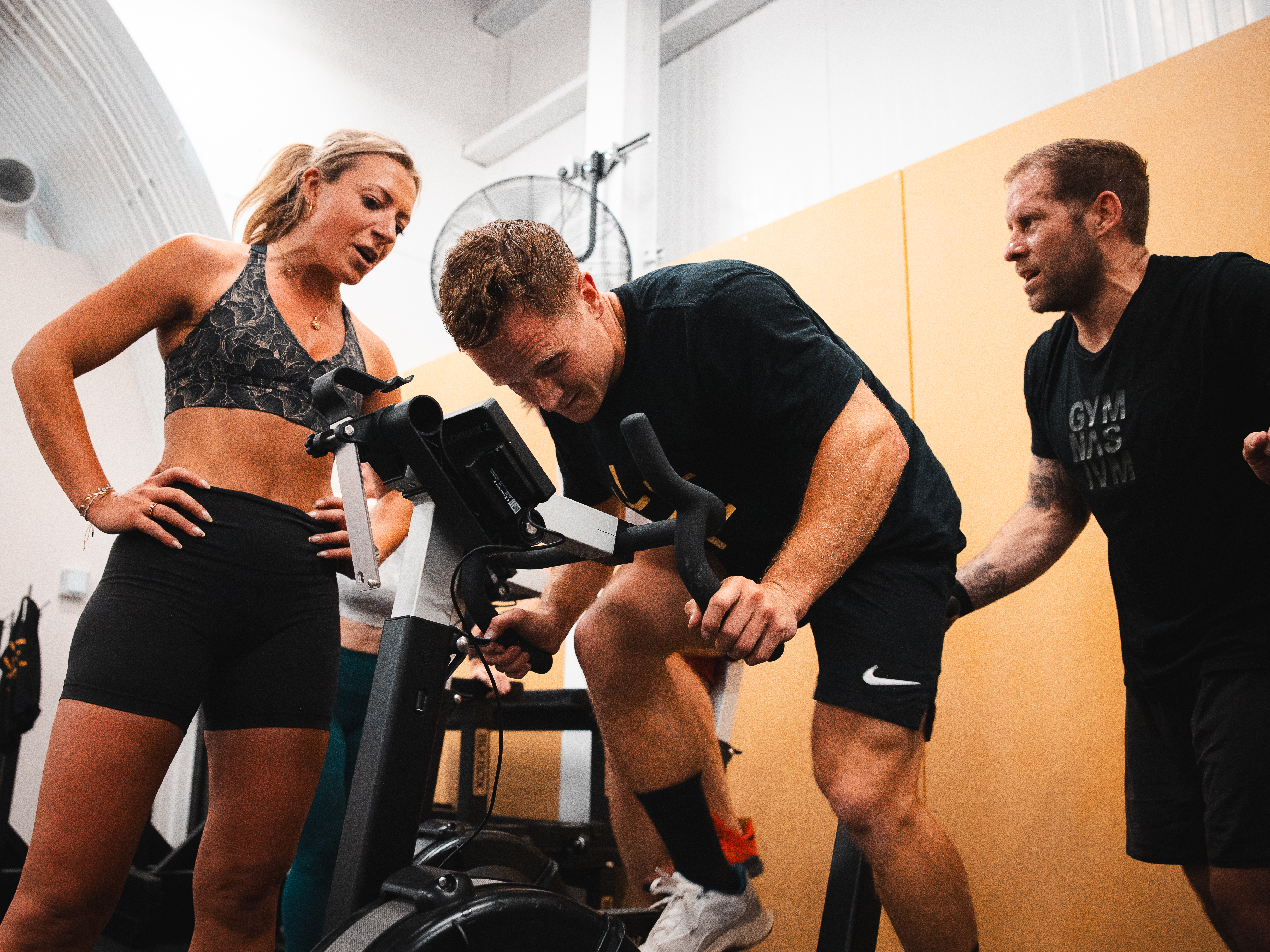
We were built to run from tigers. Instead, we answer emails.
For most of human history, stress was physical and short-lived. You saw the threat, your body flooded with adrenaline and cortisol, and you reacted. You ran. You fought. You escaped. Then the stress ended. The loop completed.
Now everything's different.
The "threat" is often an email from your boss, a Slack notification, financial pressure, or doomscrolling bad news at midnight. Biologically though, your body often responds in a very similar way. Your heart rate rises. Stress hormones increase. Your nervous system shifts into fight-or-flight mode.
Except there's one major difference: You don't physically do anything.
You sit at your desk. Or on your sofa. And you marinate in it.
Modern stress is constant low-level activation without release. Which may partly explain why intense exercise feels so important to so many people right now.
“Friendly and motivating staff, and challenging but fun workouts.”
— Rory, Gymnasium Brixton
Training as Release
Training gives the body somewhere to put stress.
You lift. You run. You breathe hard. You sweat. Your physiology finally gets to do the thing it was preparing to do all day.
There's growing research around the idea of "completing the stress cycle" through movement and physical exertion. Exercise appears to help move the body from activation back toward recovery. Research from Harvard Health shows that intense physical activity is one of the most effective ways to metabolize stress hormones and help regulate your nervous system.
But there's another important layer to this.
“Great coaches who will push you and improve you during each class. Fun and friendly atmosphere and vibe.”
— Paul, Gymnasium Brixton
Why Group Training Matters More Than You Think
The most effective training environments aren't random workouts done alone while half-checking emails between sets.
They're structured. Coached. Shared.
That matters because modern life is increasingly fragmented and isolating. Many people spend their days behind screens, commuting alone, or consuming endless streams of information without much real human interaction.
Then they walk into a room where people know their name.
There's a coach guiding the session. A plan to follow. Other people suffering alongside you. Shared effort. Shared accountability.
For one hour, the noise quiets down.
You stop thinking about notifications and start thinking about your breathing. Your pace. Your next set. The person next to you getting through it too.
And that's probably one of the reasons group training continues to grow so quickly.
Not just because people want to "get fit." But because they want to feel better.
“I'm definitely not the best, or most capable person, in the classes but have always been made to feel welcome. I'm enjoying the progress I've made, and love the support and encouragement given by all the coaches.”
— Phil, Gymnasium Brixton
The Broader Benefits
More grounded. More capable. More connected. Less overwhelmed.
The physical benefits matter, obviously. Strength, cardiovascular health, resilience, longevity.
But increasingly, the gym is becoming something else too: A structured answer to an unstructured world. A place where modern stress finally has somewhere to go.
At Gymnasium, our approach to group training is built around this exact principle. Structured classes. Real coaching. People who show up consistently. A framework that removes the complexity so you can focus on the work.
No randomness. No Instagram fitness. No performance theatre.
Just training that leaves you feeling better outside the gym too.