Functional Fitness After 45: Why Getting Older Should Mean Training Harder, Not Softer
You're not fragile. You're entering one of the most important training decades of your life.
12 min read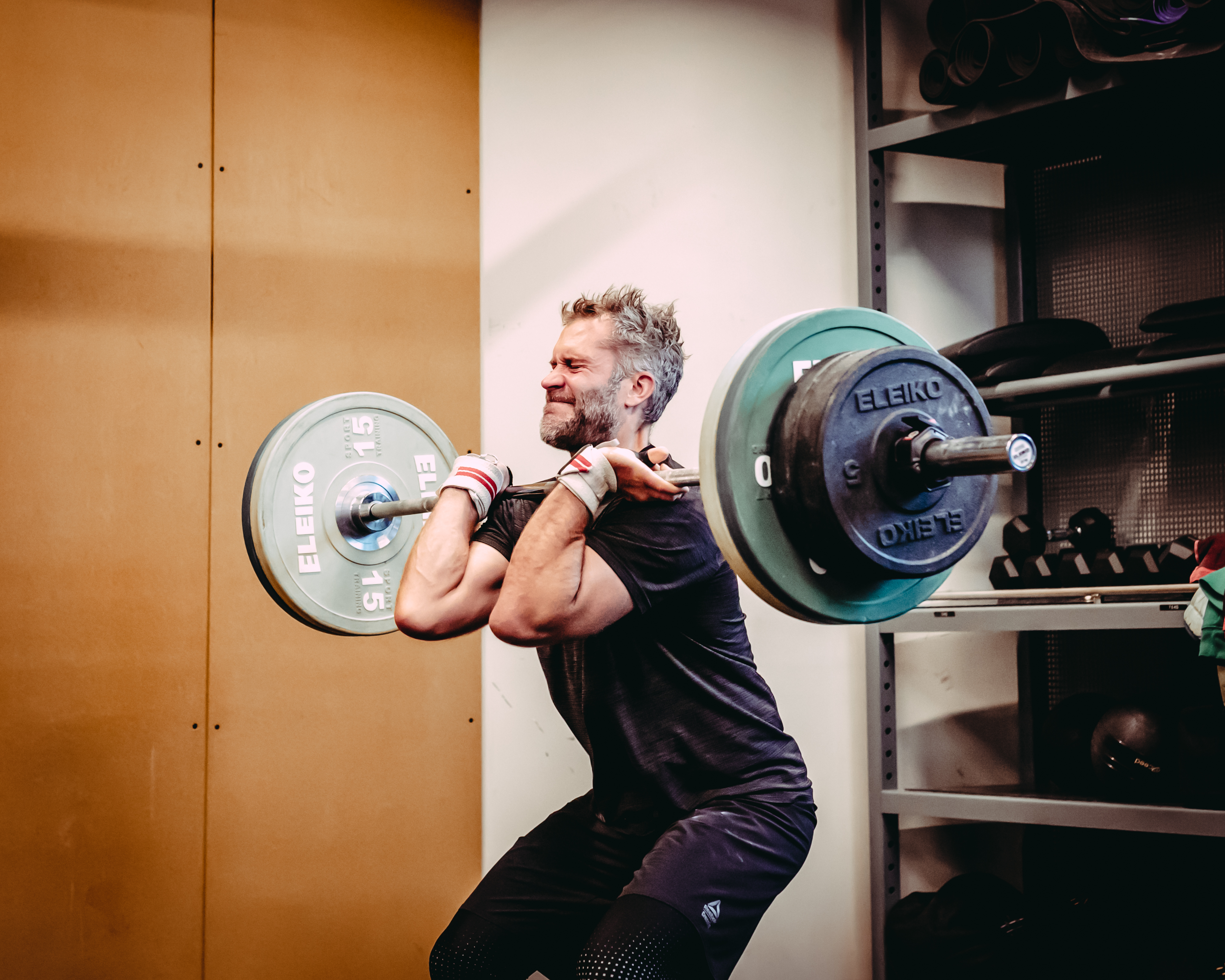
There is a strange thing that happens when fitness content talks to people over 45.
Suddenly everyone is treated like they are one mildly enthusiastic lunge away from needing a stairlift.
The language changes. The ambition shrinks. The workouts become beige.
Stand up from a chair. Sit back down. Maybe squeeze a tennis ball. Congratulations, you are ageing well.
No thanks.
If you are 45, 50 or 55, you are not done. You are not fragile. You are not preparing quietly for decline. You are entering one of the most important training decades of your life.
And this is exactly when functional fitness starts to matter most.
“I've been doing CrossFit for ten years and this is by far one of the best run gyms in London. Consistent coaching, great selection of well-kept equipment.”
— Jonathan, Gymnasium Brixton
The Middle-Age Fitness Lie
For years, the fitness industry split people into two lazy categories: young people train for performance and challenge, older people train for safety and survival.
There is some truth in that later-life message. But it arrives far too late.
By the time someone is 65 or 70 and being told to preserve muscle, maintain balance and protect bone density, the real opportunity has already been missed.
The better question is: what should you be doing at 45, 50 and 55 so you arrive at 65 with more strength, more muscle, more confidence and more physical options?
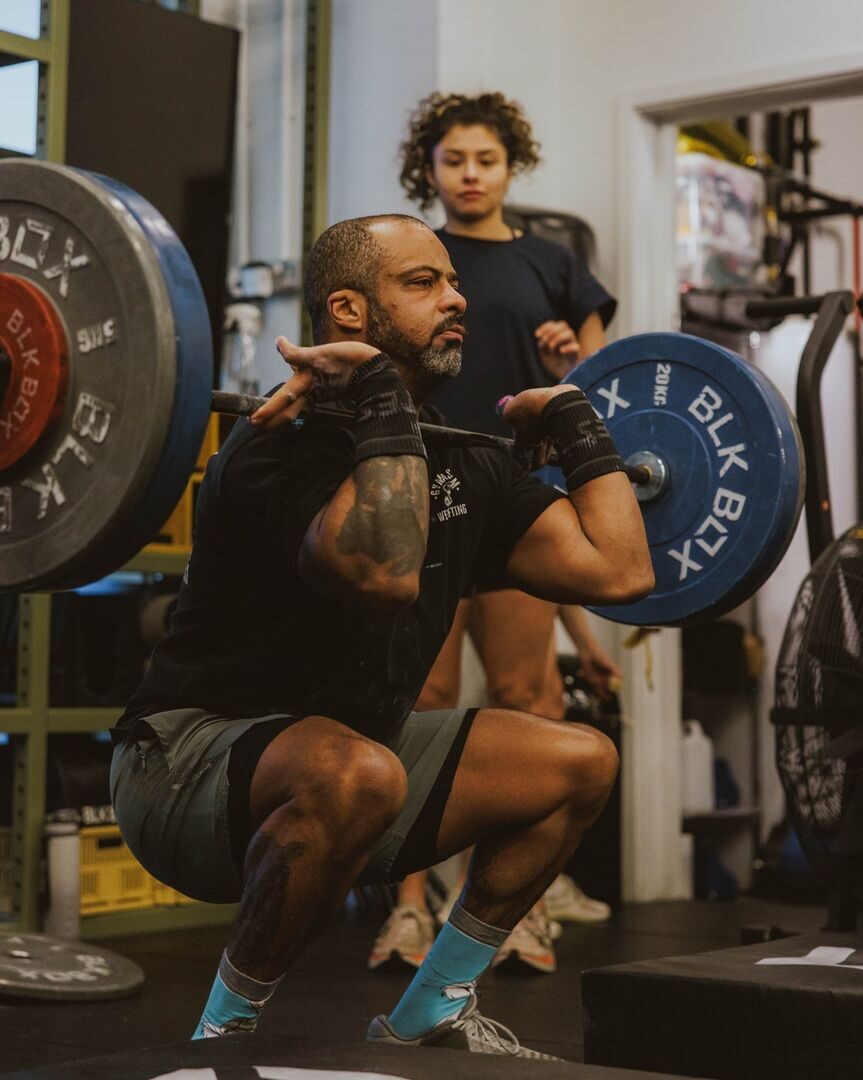
That answer is straightforward. You need to lift weights. You need to train progressively. You need to move through full ranges. You need to build your engine. You need to keep learning physical skills. You need to train with enough intensity that your body has a reason to adapt.
In other words, you need proper training.
Muscle Is Not Just For Looking Better
Muscle gets marketed badly.
For men, it is often sold as ego. For women, it has historically been treated as something to fear.
Both are nonsense.
Muscle is one of the most useful tissues in the body. It supports metabolism, protects joints, improves glucose control, helps maintain posture, contributes to strength and power, and gives you a physical reserve when life gets difficult.
You do not want to reach later life with just enough muscle to get by. You want a surplus.
Because ageing does not usually take everything at once. It slowly taxes the system. A bit of muscle here. A bit of bone density there. A bit of power. A bit of confidence.
The people who age best are often not the ones who avoided hard work. They are the ones who built enough capacity that the normal losses of ageing had less impact.
Train now so later has more room in it.
Bone Density Needs Load
Bone is living tissue. It responds to stress.
That does not mean reckless stress. It means intelligent, progressive, repeated loading.
Walking is good. Running can be useful. But jumping, impact, resistance training and heavy lifting all create signals that tell the body: keep this structure strong, we are still using it.
This matters hugely from midlife onwards, especially for women approaching or moving through menopause, when changes in hormones can accelerate bone loss. But this is not just a women's health issue. Men lose bone and muscle too.
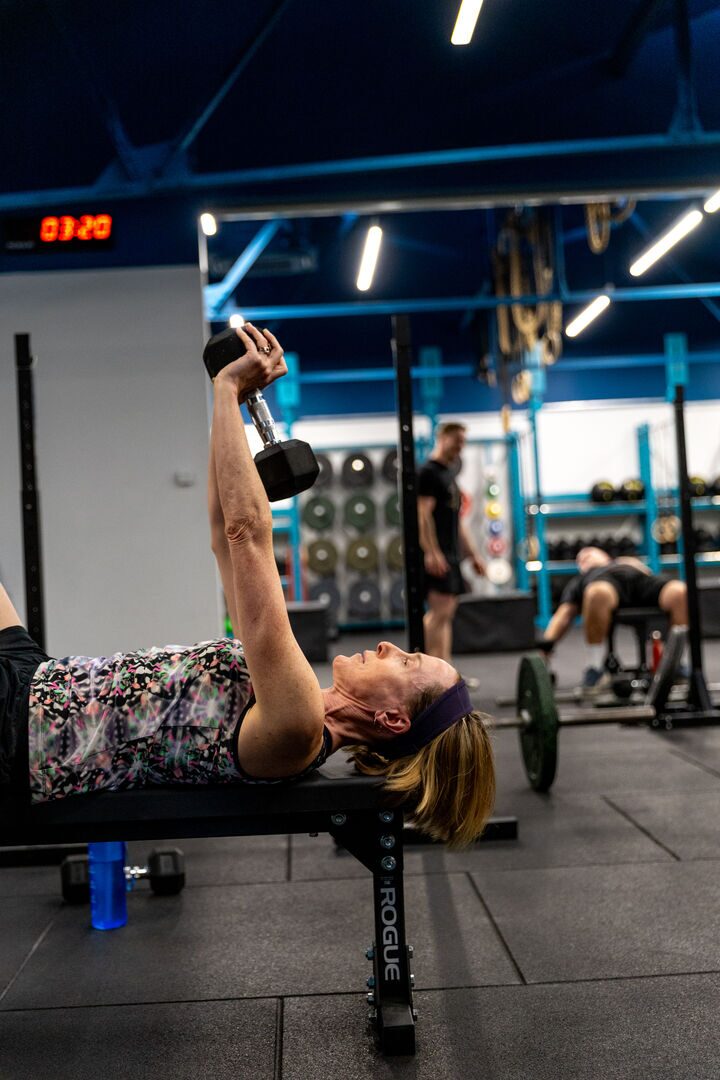
Strength training is one of the clearest tools we have for maintaining musculoskeletal health. Squats, deadlifts, presses, pulls, carries, lunges, step-ups and loaded movement all ask the skeleton to do what it was built to do: handle force.
Bones do not get stronger because you bought a supplement. They get stronger because you gave them a job.
Strength Is A Longevity Signal
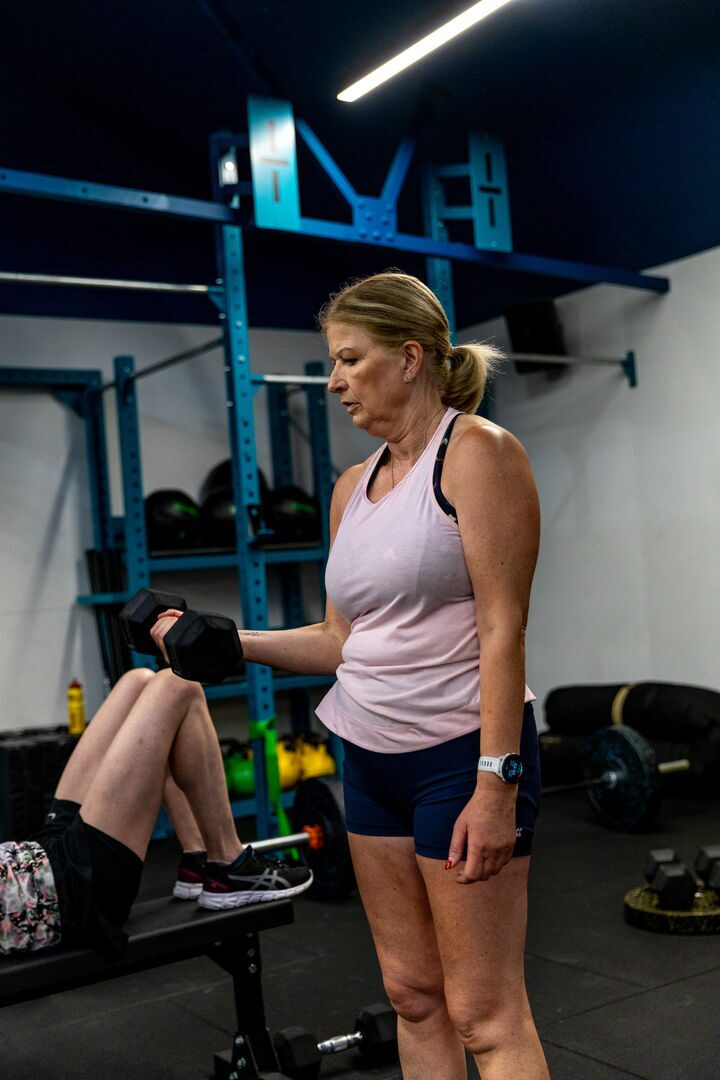
One of the most interesting shifts in health research is the growing focus on strength as a marker of ageing well.
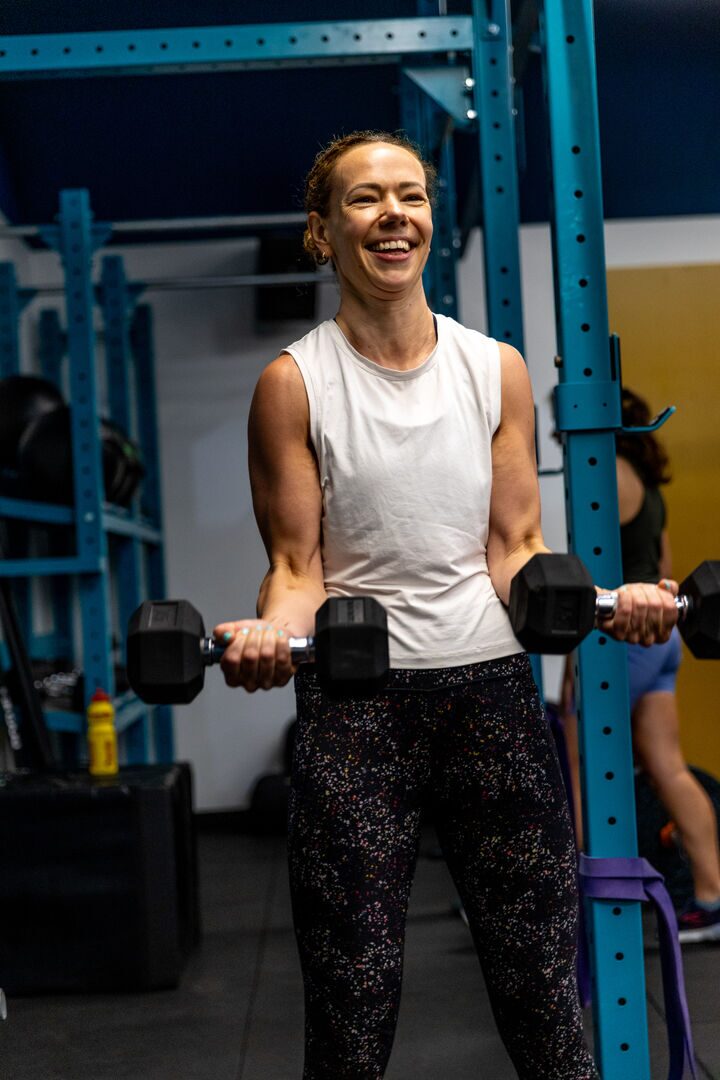
Grip strength, leg strength and the ability to produce force are consistently linked with better outcomes as people age. That does not mean grip strength is magic. It means strength is a useful proxy for a bigger system: muscle mass, nervous system function, movement confidence, training history and general resilience.
Put bluntly, strength tells us something.
Can you lift? Can you carry? Can you push? Can you pull? Can you get up from the floor? Can you climb, brace, rotate and stabilise?
These are not party tricks. They are signs that your body still has bandwidth.
This is why learning new physical skills and training with cognitive demand matters as you age. Your nervous system needs work, not just your muscles.
Functional Fitness Is Better Than Isolated Fitness
There is nothing wrong with machines. There is nothing wrong with targeted isolation work. But as you get older, training should not only build individual muscles. It should build capability.
Functional fitness does this well because it combines strength, conditioning, mobility, coordination, balance, skill and intensity.
A good functional fitness programme includes squatting, hinging, pressing, pulling and carrying. Moving loads through space. Training the trunk to resist movement. Developing power through explosive work scaled properly. Building aerobic capacity through varied conditioning. Learning skills that keep the brain involved.
That final point matters. Adults get boring with movement. We find the thing we can already do and repeat it forever. But learning new skills is part of staying young in the broadest sense. Not young as in pretending you are 25. Young as in adaptable.
Your body likes challenge. Your brain likes challenge. Your confidence likes challenge.
The trick is to dose it properly.
“The coaches are all friendly and willing to offer advice.”
— Adam, Gymnasium Brixton
You Do Not Need To Train Like A 25-Year-Old
Training hard after 45 does not mean training stupidly.
You do not need to smash yourself into paste six days a week. You do not need to chase every leaderboard. You do not need to turn every workout into a small emergency.
The aim is not maximal chaos. It is structured progression.
That means heavy enough to create adaptation. Technical enough to build skill. Varied enough to stay interesting. Repeatable enough to produce progress. Coached enough to keep standards high. Recoverable enough that you can come back and train again.
At Gymnasium, this is exactly the point of [DELTΔ and Athletica]. You should not have to guess what to do, how heavy to go, or whether you are moving well. That is what coaching is for.
Because the goal is not just to work hard. The goal is to work hard in the right direction.
Mobility Matters More Than You Think
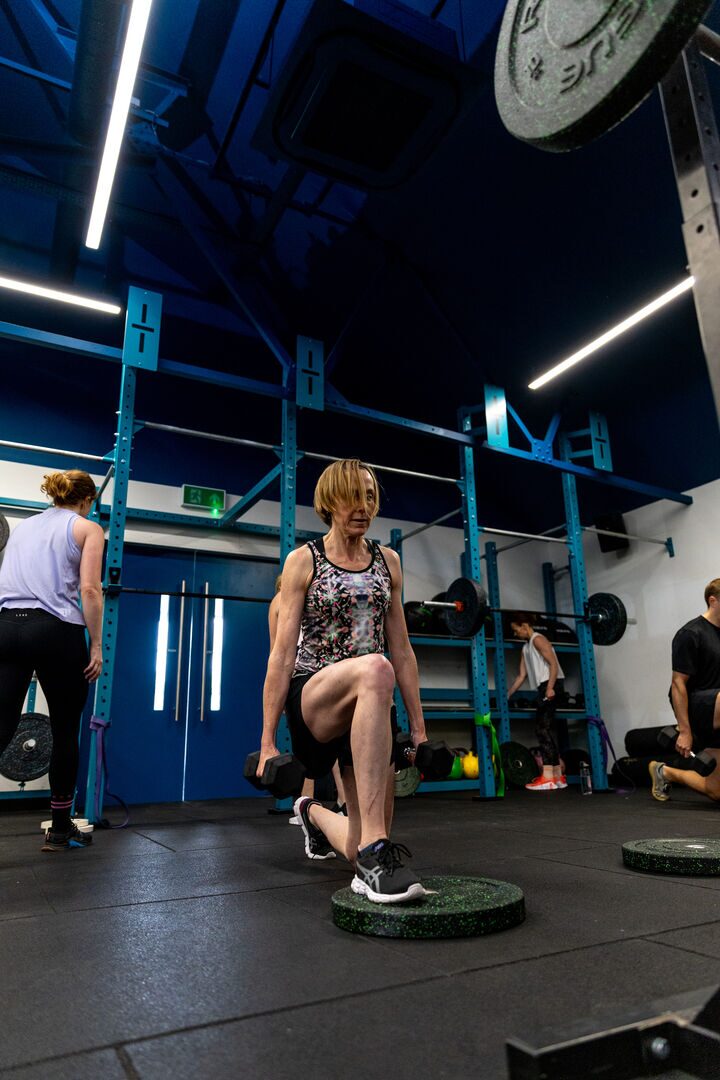
Mobility often gets treated like the boring bit before the real work starts. That is a mistake.
After 45, mobility becomes one of the things that lets you keep training properly. Not gentle stretching. Actual mobility: control, range, strength at end range, joint awareness and movement quality.
You need hips that let you squat. Ankles that let you run and lunge. Shoulders that let you press and hang. A spine that can rotate. A trunk that can brace.
Mobility is not separate from strength. It is what lets you express strength safely and efficiently.
The best version of this is mobility woven through training: warm-ups that prepare you, movement standards that improve you, accessory work that supports you, and coaches who notice when your body is cheating its way around a restriction.
Move better and you can train harder. Train harder and life gets bigger.
The Cardiovascular Bit Still Matters
This is an article about strength. But let's not pretend your heart and lungs are optional extras.
The best version of ageing well combines strength and engine. You want muscle and aerobic capacity. Power and stamina. Heavy lifting and long, steady work. High-intensity efforts and lower-intensity base-building.
The problem is the middle. A lot of people spend years training in the murky zone where everything feels quite hard but nothing is targeted enough to change much. Too hard to recover from easily. Too easy to drive real adaptation. The fitness equivalent of beige trousers.
A better approach is more deliberate: lift heavy with intent, train hard sometimes (properly hard), build your aerobic base with longer efforts, recover properly, and repeat for years.
That combination gives you more than fitness. It gives you capacity. The ability to do more, tolerate more, recover better and stay involved in the things you care about.
The Confidence Problem Is Real
One reason people over 45 avoid strength training is not laziness. It is uncertainty.
They do not know where to start. They worry about technique. They worry about injury. They feel out of place.
This is why small-group coached training is so powerful. It removes the guesswork. You get the plan, the instruction, the scaling, the correction and the community. Gymnasium Start exists for exactly this: a proper way in, no guessing required.
Because confidence is not built by reading articles. Even this one.
Confidence is built by doing. You lift the weight. You learn the movement. You come back. You add a little more. You realise your body is not broken. You realise you are more capable than you thought.
That is how people change. Not through motivation. Through evidence. Repeated evidence that they can.
“The coaches are not just there to count reps, they're invested in your progress. And if you're struggling, they'll adjust the exercises and modify intensity.”
— Carlos, Gymnasium Brixton
Ageing Well Is Not Passive
Ageing well is trained.
Muscle is trained. Bone density is trained. Power is trained. Mobility is trained. Confidence is trained. Resilience is trained.
And the earlier you start taking that seriously, the more options you keep.
So no, this is not about standing up and sitting down from a chair.
This is about squatting, deadlifting, pressing, pulling, carrying, running, rowing, jumping, learning, sweating, recovering and coming back again.
You are not too old for functional fitness. You are exactly the age where it starts to matter most.