Train Your Brain, Not Just Your Body
You don't need to walk on your hands to get fitter. But it might just make you cleverer.
8 min read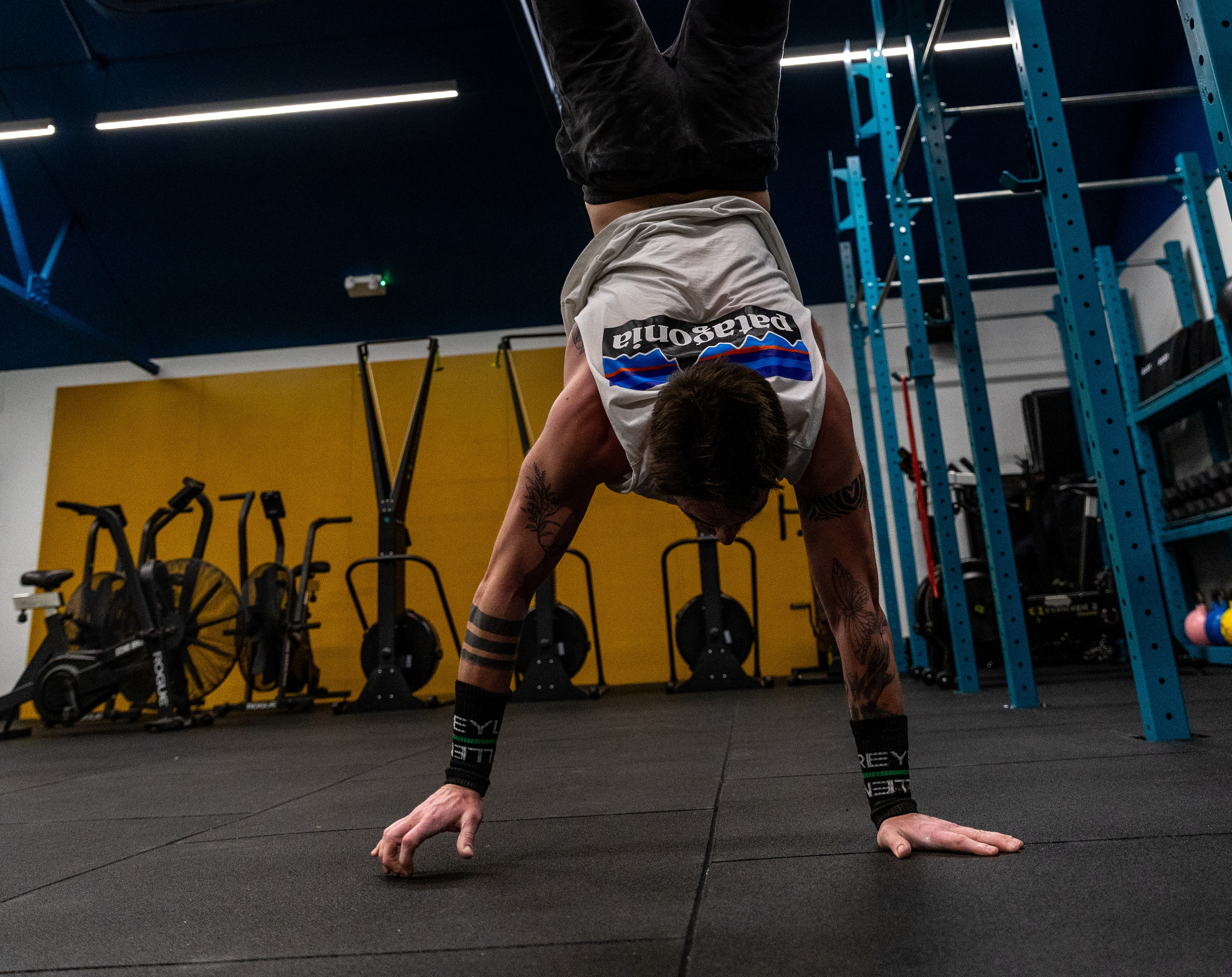
Kids try things constantly. Climbing, balancing, jumping, throwing, skating, falling over repeatedly without embarrassment.
Adults? We find one form of exercise we tolerate and repeat forever while staring at a screen attached to a treadmill.
And increasingly, that looks like a mistake.
Because learning new physical skills is hugely important not just for fitness, but for brain health, resilience, confidence and long-term cognitive function.
Not because novelty burns more calories.
Because challenge changes the brain.
“The coaches are first class, and always go the extra mile to push and improve you, and the people are genuinely awesome, which creates such a relaxed, fun and positive vibe.”
— Lucy, Gymnasium Brixton
Your Brain Likes Being Bad At Things
The human brain appears to thrive on challenge, novelty and skill acquisition.
When you learn a new movement pattern, your brain has to build and strengthen neural pathways. Coordination, balance, timing, proprioception, reaction speed, spatial awareness and decision-making all get involved simultaneously.
You are not just "working out". You are solving problems physically.
Research around neuroplasticity shows the brain retains the ability to reorganise itself throughout life. Learning new motor skills stimulates this process, particularly when the activity is complex, unfamiliar or cognitively demanding.
That matters more than people realise.
A walk is good. A heavy squat is good. But learning a technically demanding movement under coaching and pressure? That asks something very different of the nervous system.
There's evidence that activities requiring coordination, sequencing and rapid adaptation may provide greater cognitive stimulation than repetitive exercise alone.
In simple terms: your brain likes having to think.
We Built A Training System Around Skill, Not Just Sweat
At Gymnasium, DELTΔ exists as the foundation.
Structured strength. Conditioning. Engine work. Simple, repeatable progress.
There's still skill there too. Learning how to squat properly. Brace. Hinge. Run efficiently. Move with control under fatigue. Most people massively underestimate how much coordination and body awareness good foundational training actually requires.
It matters enormously because most people need consistency before complexity.
But Athletica exists for a different reason.
Athletica is where things become more neurologically demanding.
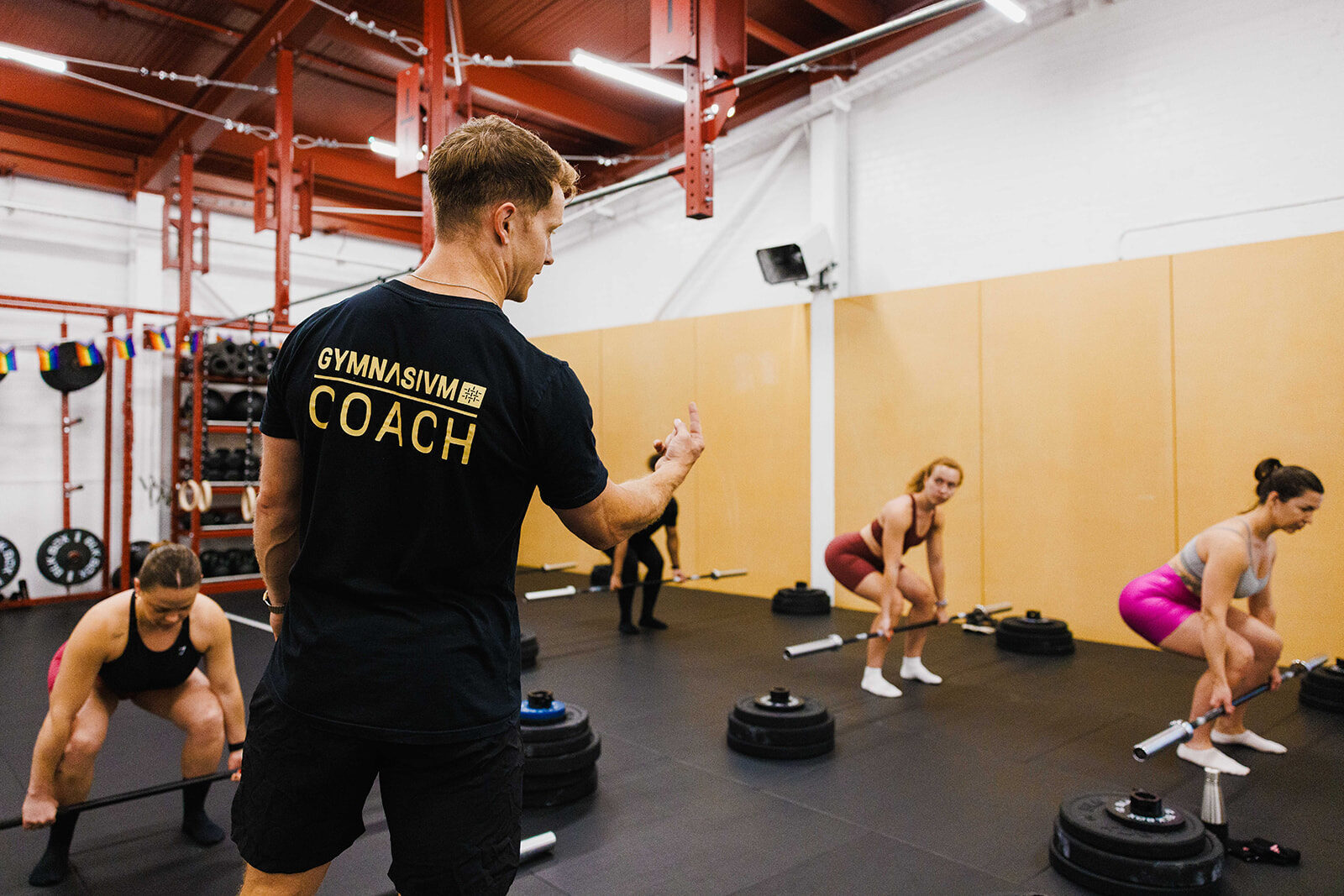
Learning Olympic lifts. Gymnastics. Complex barbell cycling. Moving your body through space. Developing coordination under fatigue. Learning how to generate force efficiently.
It is not just physically hard. It is cognitively demanding.
And that challenge appears to matter.
Because the moment adults start learning difficult physical skills again, something changes psychologically too.
“Absolutely love this gym, I have never been this excited to go to the gym until I joined.”
— Dominique, Gymnasium Brixton
Capability Changes People
One of the underrated parts of learning physical skills is identity.
Adults slowly begin believing: "I can learn difficult things."
That spills into everything else.
Someone who learns their first pull-up, handstand or technically sound clean after believing they were "not sporty" for 20 years often changes how they see themselves entirely.
Competence builds confidence. Confidence increases participation. Participation improves health. Health improves mood and resilience.
The loop reinforces itself.
And importantly, this does not require elite performance.
You do not need to compete. You do not need to become obsessive.
You just need enough challenge to keep adapting.
“The coaches are genuinely outstanding—knowledgeable, approachable, and always pushing you to improve while keeping sessions safe and enjoyable.”
— Adam, Gymnasium Brixton
The Real Goal Isn't Fitness
It's adaptability.
That may be the real long-term value of training: preserving the ability to learn, adjust and stay engaged with life.
Not becoming elite. Not walking around on your hands at dinner parties.
Just remaining physically and cognitively capable enough to keep saying: "Yeah, I'll give that a go."
That mindset might matter far more than people realise.