The Biggest Barrier to Your Fitness Isn't Your Body. It's Your Ego.
What if the thing stopping you getting fitter isn't your lungs, your legs or your schedule? What if it's your need to prove yourself every time you train?
8 min read
Walk into almost any gym and you'll see the same pattern.
Someone turns an easy run into a race because another runner overtakes them. Someone ignores the weight prescribed by the coach because they don't want to look weak. Someone finishes a conditioning session utterly exhausted and walks away convinced they've had a great workout.
Maybe they have. But maybe they've just practised being tired.
One of the biggest misconceptions in fitness is that the harder every session feels, the fitter you'll become. The reality is almost the opposite. The fittest people don't train hard all the time. They train with purpose.
Sometimes that purpose is to push to the limit. Sometimes it's to lift heavy. Sometimes it's to recover. And sometimes, perhaps surprisingly, it's to deliberately slow down.
The thing that often prevents people doing that isn't a lack of discipline. It's ego. Not arrogance. Not showing off. Just the quiet voice that says: "I should be fitter than this." "I can't let them beat me." "I don't want to scale."
Ironically, that voice is often the biggest obstacle to long-term progress.
“Having never done gym classes/cross fit exercises, this was a great place to learn. The coaches are supportive, knowledgeable and create a culture that makes you want to come back.”
— Charlie, Gymnasium Brixton
Fitness isn't a test. It's an adaptation.
Your body doesn't care what anyone else in the gym lifted. It doesn't know whether your watch says you came first on Strava. It certainly doesn't know how impressed the person on the next treadmill was.
Your body only understands one thing: the training stimulus you gave it.
Every workout sends a signal. Lift heavy enough and your muscles adapt. Run long enough and your cardiovascular system adapts. Sprint hard enough and your speed adapts. Train consistently enough and your body becomes more resilient.
The mistake many recreational exercisers make is assuming that every signal should be "harder." In reality, different adaptations require different levels of intensity. Trying to maximise everything in every workout usually means maximising nothing.
The moderate intensity trap
Exercise scientists have observed this pattern for years. Elite endurance athletes spend the majority of their training at relatively low intensity, with only a small proportion at very high intensity. This approach, often called polarised training, has been shown to produce superior endurance adaptations compared with spending most sessions in the middle.
Yet most recreational exercisers do almost the opposite. Every run feels like a threshold effort. Every lift is done at hard effort. Every session is meant to leave you wrecked.
The problem is that middle-ground intensity is the worst place to train. Too hard to recover fully from. Too easy to create significant adaptation. You end up chronically fatigued without getting noticeably fitter.

The five patterns of ego in training
1. The pace chase. Someone passes you on a run. Your ego says you can't let them win. Your programme says you should be building base fitness at conversational pace. Guess which one your body listens to.
2. The weight refusal. Your coach says today is about moving well at moderate load. Your ego says: "I could lift more." So you do. Your form degrades. You reinforce poor movement patterns.
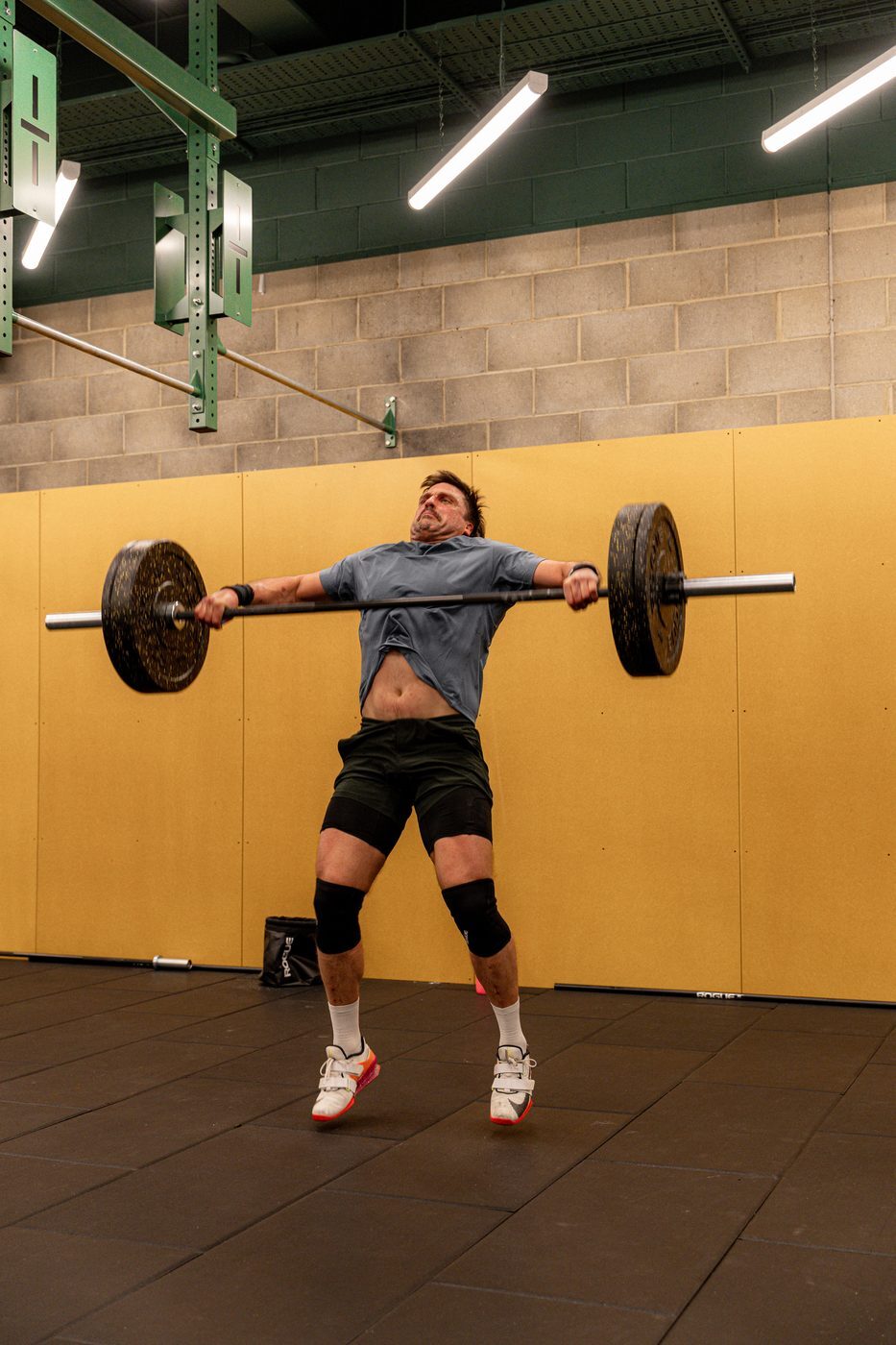
3. The scaling resistance. The workout says: "Use a lighter kettlebell if needed." Your ego says: "I don't need to scale." By the end of the session your movement looks terrible and you're training fatigue, not skill.
4. The post-injury return. You were injured. You're back. Your ego won't let you train like someone who just came back from injury. So you rush back to hard training, get re-injured, and start over.
5. The exhaustion validation. You finish a workout and you're absolutely destroyed. You feel good because it was hard. Meanwhile, someone in the next room completed a more effective session and walked out feeling fresh.
“Been at Gymnasium for a month now and cannot fault anything. What stands out the most is how they've managed to build a sense of community which makes every class better.”
— Billie, Gymnasium Brixton
What confidence actually looks like
The strongest athletes in most gyms are rarely the ones trying to prove something in every workout. They're the ones willing to train smart. Willing to take the easier session. Willing to scale when the day calls for it. Willing to ask questions.
That's not weakness. That's confidence. Real confidence doesn't need proving every training session. Real confidence knows the long game. Real confidence is willing to look slow, small or easy if that's what the training demands.
Beginners often think the opposite. They confuse never backing down with strength. In reality, knowing when to back off is where strength actually lives.
The compound cost of ego
The real damage of ego-driven training isn't immediate. It's cumulative. Chronic fatigue. Persistent injuries. Plateaued progress. Burnout. These aren't usually caused by training hard. They're caused by training hard with no off-switch.
The people who sustain progress for decades aren't the ones who trained hardest in their twenties. They're the ones who learned to train smart early, so they could keep training for 40 years.
That requires a different kind of discipline. Not the discipline to always push. The discipline to sometimes pull back. The discipline to choose the lighter weight. The discipline to run easy when your ego wants to race.
“Whether you're a beginner or want to step things up and take it to the next level with CrossFit, the gym has a great team of coaches, friendly and sociable members.”
— Ronan, Gymnasium Brixton
The question that changes everything
Before your next workout, ask yourself: "What is this session supposed to achieve?" Not "how hard can I go?" Not "what will impress people?" Just: what is the actual purpose of today?
If today is a recovery session, recovering properly is success. If today is about skill, moving well is success. If today is about base building, holding the pace is success.
When you train according to purpose instead of ego, something interesting happens. You get fitter. You get less injured. You get to keep training. And over years, that compounds into real progress.