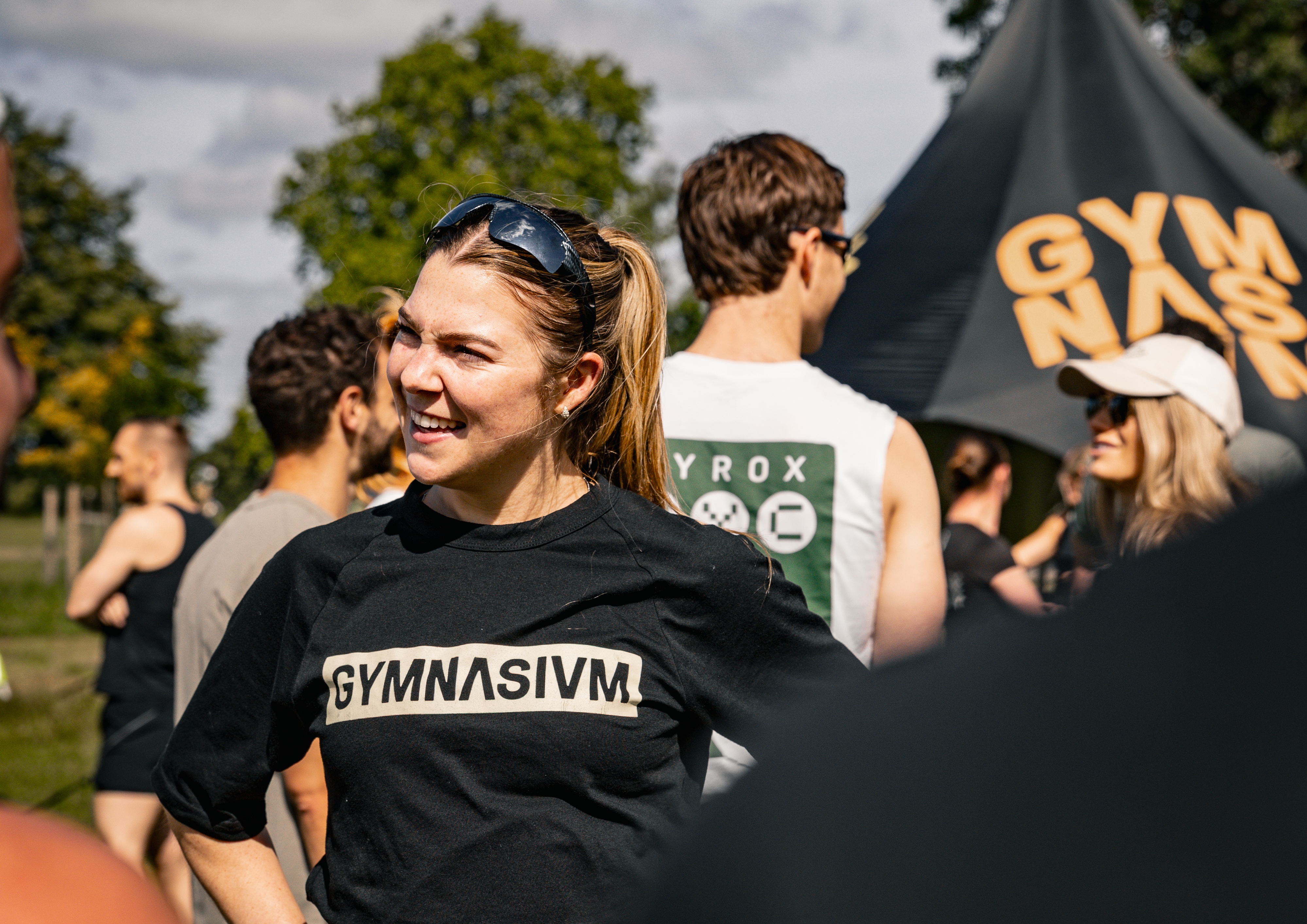
There used to be three places where life happened. Home. Work. And somewhere else. The pub. The sports club. The local café. Church. The library. The village hall. The working men's club. The local football team. The place where people simply gathered.
Sociologists call these third places. They weren't where you lived. They weren't where you worked. They were where communities happened. The problem is, we're quietly losing them.
"I've made some of the best friends here - Crossfit is frequently one of the highlights of my day!"
— Jem, Gymnasium Twickenham
We've optimised away community
Modern life is wonderfully efficient. You can work from home. Shop online. Order dinner. Watch films. Exercise in the garage. Have groceries arrive at your door. Every innovation solves a problem. But together they've created a new one: we've removed almost every reason to leave the house.
For the first time in history, it's entirely possible to go days interacting with almost nobody. That's incredibly convenient. It's also incredibly new. And incredibly risky.
The infrastructure of casual human encounter—the places where you simply showed up and saw people—has quietly vanished. The local pub has closed. The community centre has been privatised. The sports club requires a 45-minute commute. The workplace used to force interaction; now it forces Zoom calls from your kitchen. If you've recently moved to London, you've felt this absence acutely.
Third places were never about the place
The mistake is thinking a pub created community. It didn't. The building was irrelevant. It was the repetition. Seeing the same faces every Friday. Knowing the landlord. Chatting to someone you'd never arranged to meet.
Third places created what sociologists call social capital—the trust, relationships and networks that help communities function. Harvard political scientist Robert Putnam famously argued that Americans were becoming less connected through civic organisations, clubs and community groups, weakening the social fabric in the process. He called his book Bowling Alone. Not because bowling was important. Because bowling leagues were one of the last places people gathered regularly with neighbours.
Nobody went to the bowls club thinking: "Today I'd like to increase my social capital." They went because that's what they always did. Community was the by-product.
Third places created belonging through repetition, ritual and the simple fact of showing up. The building mattered far less than the habit.
We didn't stop needing community. We just stopped building it.
Humans haven't changed. We still need belonging. Still need purpose. Still need recognition. Still need somewhere people know our name. What's changed is the infrastructure that used to provide those things.
If you moved to a new town fifty years ago, there were obvious routes into the community. Join the cricket club. Go to church. Volunteer. The local pub. Parents' association. Today? Many people move into a city where they know nobody. They work remotely. Order food. Watch Netflix. Repeat. Then wonder why they feel disconnected.
This isn't a personal failure. It's an infrastructure failure.
London is full of people. And short on community.
London is one of the biggest cities in Europe. It's also one of the easiest places to feel anonymous. You can travel for an hour on the Tube without speaking. Walk through thousands of people who'll never see you again. Live next door to someone for years without learning their name.
Density isn't the same as connection. Being surrounded by millions of people doesn't guarantee belonging. In fact, urban researchers have long noted that large cities can produce both extraordinary opportunity and profound isolation simultaneously.
You're surrounded by people. Almost all strangers. And in modern London, that's often the point—we've optimised for anonymity.
The places that remain matter more than ever
The disappearance of third places makes the ones that survive incredibly valuable. Parkrun. Running clubs. Choirs. Climbing walls. Volunteer groups. Five-a-side football. Padel clubs. Community gardens. And increasingly—good gyms.
Notice the word good. Not every gym becomes a third place. Some are simply warehouses full of treadmills. Everyone wears headphones. Nobody speaks. People arrive. Train. Leave. That's exercise. Not community.
The difference isn't equipment. It's ritual.
The difference isn't equipment. It's ritual.
Every Tuesday at 6:30. Every Saturday morning. Coffee afterwards. The same coach. The same warm-up. The same terrible jokes. The workout changes. The ritual doesn't.
Ritual is surprisingly powerful. Behavioural scientists have long understood that repeated shared experiences create familiarity, trust and eventually identity. You stop being "someone who attends a gym." You become one of our Tuesday people. Identity forms long before friendship. Friendship follows.
That's how third places work. They don't ask you to be social. They just ask you to show up. Community is what happens when you do.
Why shared effort matters
There's another ingredient: shared hardship. Not suffering for suffering's sake. Shared challenge. Running intervals together. Helping someone finish the last reps. Celebrating a personal best. Laughing about how awful that workout was.
Psychologists have found that synchronised activity and shared goals increase feelings of social bonding and cooperation. It's why sports teams become close. Military units become close. Expedition groups become close. And yes—training groups become close. You earn relationships together.
You don't just know these people. You've suffered alongside them. You've pushed each other. You've seen each other at your worst—sweating, struggling, trying. That creates a different kind of bond than anything you'll build over email or even coffee.
This isn't about fitness. It's about belonging.
The irony is that many people join a gym because they want to change their body. The body changes. Something else changes too. People start recognising them. Greeting them. Partnering with them. Missing them when they don't turn up. That's a very different experience from simply owning a membership.
This is what research shows about the real drivers of long-term fitness commitment: it's not motivation. It's relationships. People stay because they don't want to let other people down.
That's a third place doing what third places do. And when people have a place where they belong, friendships follow naturally.
The best gyms aren't selling exercise. They're providing infrastructure.
Infrastructure for consistency. Infrastructure for health. Infrastructure for accountability. Infrastructure for friendship. Infrastructure for belonging.
Nobody advertises it like that. Maybe they should. Because if loneliness is one of the defining problems of modern life—and research increasingly suggests it is—then places that create genuine human connection aren't a luxury. They're part of the solution.
Gymnasiums like Gymnasium go further. We host regular events and socials where the connection extends beyond the gym floor. Run clubs. Team competitions. Post-workout gatherings. The third place isn't just the training. It's the life you build around it.
We don't need more apps. We need more places.
Every year another app promises to help us connect. Meet people. Network. Find communities. Swipe. Match. Message. Perhaps we've been looking in the wrong direction.
Community rarely starts online. It starts when the same people keep showing up in the same place for the same reason. Week after week. Month after month. Year after year. That's what third places have always done. The buildings may have changed. The need hasn't.
So what replaces the third place?
Maybe there isn't one answer. Maybe it's Parkrun. Maybe it's a rowing club. Maybe it's your local choir. Maybe it's volunteering every Wednesday evening. Maybe it's a gym where the coach notices you've had a haircut and your training partner texts when you miss a Saturday session.
The point isn't where. The point is that everyone needs somewhere. Because health isn't just about moving your body. It's about having a place where you belong. It's about people noticing if you're missing. It's about showing up to something that matters, and knowing it matters because other people show up too.
In a world that has quietly dismantled so many of those places, the ones that remain have never been more important.
References:
1. Robert D. Putnam, Bowling Alone: The Collapse and Revival of American Community (Simon & Schuster, 2000). Putnam's seminal work documenting the decline of civic engagement and community participation across American society.
2. Oldenburg, R. The Great Good Place (Marlowe & Company, 1999). The foundational work defining "third places" as informal public gathering spaces distinct from home and work that support community and social engagement.
3. Tarr, B., Launay, J., & Dunbar, R. I. M. (2014). Music and social bonding: "self-other" merging and neurohormonal mechanisms. While focused on music, this and related research demonstrates that synchronised movement and shared activity strengthen social bonds. Similar findings have been shown in sport and exercise settings.