The Finish Line Doesn't Matter As Much As You Think
Our brains are wired to finish things. Your body doesn't care whether you did.
5 min read
Our brains are wired to finish things. That's why people struggle to get fitter.
Psychologists have known for decades that humans crave completion. We like ticking boxes, empty inboxes, closing rings and crossing finish lines. It's called the goal-gradient effect: the closer you get to the end, the harder you push, purely because finishing feels good.
The problem? Your brain is chasing completion. Your body is chasing adaptation.
Those are two very different things.
Yet we judge our workouts by whether we finished them.
"I didn't finish." "I got time-capped." "I only did four rounds."
As if that somehow means the workout didn't work. It doesn't.
Your body has absolutely no idea whether you completed the final round. It only knows one thing: the stimulus you gave it.
“I have only recently joined this community but I can definitely say that I felt very welcomed from the moment I stepped into the box. The programming here varies constantly, it's challenging.”
— Vincenzo, Gymnasium Brixton
The goal isn't to finish. It's to get the right stimulus.
The goal of a well-designed workout isn't for everyone to finish. The goal is for everyone to receive the right stimulus.
Sometimes that means finishing. Sometimes it means hitting the time cap with work still left to do. Sometimes not finishing is exactly what the coach intended.
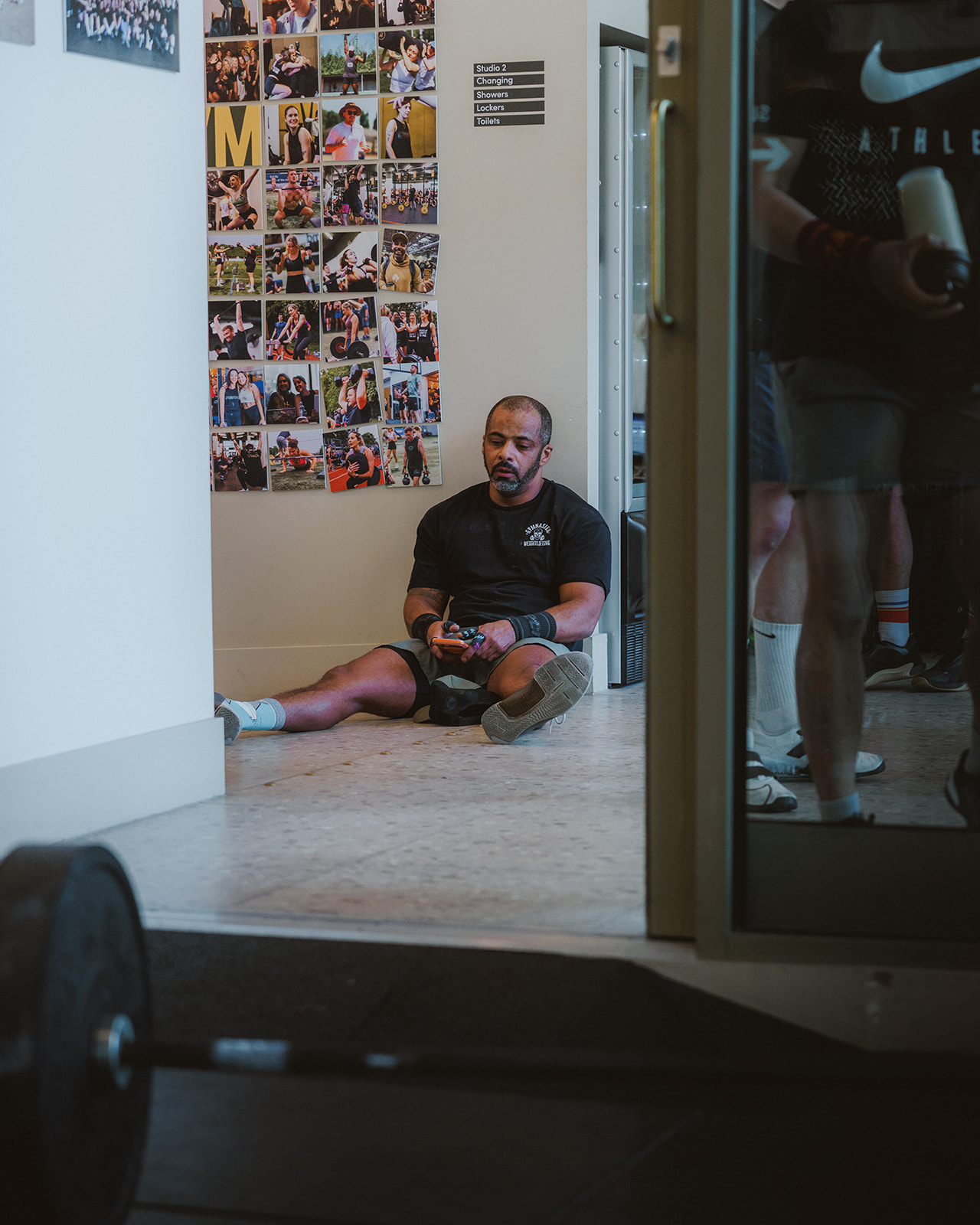

Good programming is meant to separate people
Here's the bit people don't expect: if everyone finishes at the same time in the same state, the workout probably wasn't right for half the room.
A class is one workout shared by very different people. Twenty-year-olds and sixty-year-olds. First-timers and competitive athletes. People who slept eight hours and people who were up with a newborn. People training for HYROX and people just trying to keep up with their grandkids.
There's no single workout that's perfect for all of them. That's why we scale. That's why there are time caps. That's why some people get six rounds and others get four.
Those gaps aren't flaws. They're the system working. The same logic applies to that little RX symbol next to your score — it describes the workout, not you.

Time caps aren't a punishment
Most people see the cap as something to beat. It's actually there to protect the point of the session.
If today's meant to be a hard 15-minute effort, stretching it to 28 minutes turns it into a different workout entirely. Sometimes stopping is the plan. The cap protects your recovery, tomorrow's session & your progress over the next six months.
“The progress I've made in my fitness journey has surpassed any plan I've tried on my own. I was so new to CrossFit/Delta programmes and the team are so helpful in modifying exercises based on ability.”
— Adam, Gymnasium Brixton
Consistency beats completion
The people who make the biggest gains aren't the ones who complete every workout. They're the ones who train consistently, recover well and accumulate years of appropriate stimulus.
Habits come from repetition & identity, not the odd heroic effort. One perfect session changes almost nothing. A hundred solid ones change everything.
If chasing the finish line leaves you deflated every time, you've tied your success to the wrong metric. Better question: did I get the stimulus I needed today? Yes? Then it worked.
The best athletes know when to stop
Watch anyone experienced train. They're not trying to win Tuesday's class. They know training is a series of deposits, not a single withdrawal.
Sometimes they finish. Sometimes they don't. Sometimes they hold back on purpose because tomorrow matters too. Their ego isn't on the whiteboard. It's on the long game.
"The finish line is just where the clock stopped."
“All the coaches are super welcoming and knowledgeable, and every session is 10/10 for vibes.”
— Rosie, Gymnasium Brixton
Redefine what a win looks like
Next time the buzzer goes before you're done, skip "I failed" and ask instead:
- Did I train with intent?
- Did I move well?
- Was I appropriately challenged?
- Did I stay in the stimulus my coach set?
- Can I come back tomorrow and do it again?
All yes? Then the session did exactly what it was built to do.
Fitness isn't built by finishing workouts. It's built by stacking thousands of the right ones, over years.
Ironically, the sooner you stop chasing the finish line, the faster you'll make progress.